
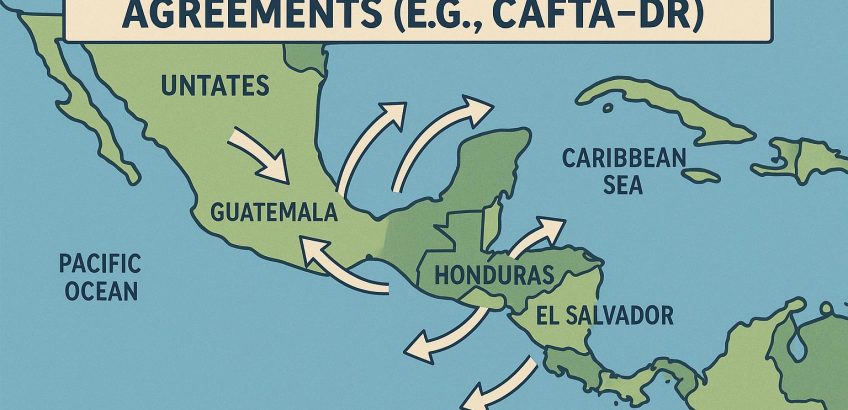
Impact of free trade agreements (e.g., CAFTA-DR)
Introduction to Free Trade Agreements
Free trade agreements (FTAs) are essential structures within the global economy, designed primarily to reduce barriers to trade between participating countries. By focusing on decreasing tariffs, import quotas, and other restrictive regulations, these agreements aim to promote economic integration and enhance trade efficiency. One prominent example of such a pact is the Central America-Dominican Republic Free Trade Agreement (CAFTA-DR). This agreement involves the United States and several Central American nations, including Costa Rica, El Salvador, Guatemala, Honduras, Nicaragua, and the Dominican Republic.
FTAs such as CAFTA-DR represent a significant leap towards seamless international trade by ensuring a level playing field in the global market. Enhanced economic integration through such agreements potentially leads to a better allocation of resources, improved productivity, and ultimately, significant contributions to global economic growth.
Benefits of Free Trade Agreements
The advantages of FTAs extend across various aspects of trade and economic dynamics. These agreements serve as catalysts that enhance economic cooperation and integration among member nations. By minimizing trade barriers, FTAs are instrumental in stimulating economic growth and generating new opportunities for businesses and consumers alike. They provide countries with access to larger markets, thereby increasing market outreach and profitability for businesses. An FTA can lead to more variety in goods and services available to consumers, which elevates consumer satisfaction. Moreover, the presence of FTAs can lead to reduced prices for consumers, primarily owing to heightened competition among producers.
Another benefit of these agreements is their role in fostering foreign direct investment (FDI). By providing a transparent and stable trading environment, FTAs make participating countries more attractive to foreign investors. This boost in FDI can lead to capital influx, technological advancements, and overall enhancement in the economic infrastructure of the member nations.
Impact on Economic Growth
FTAs often drive sustained economic growth by facilitating increased exports for participating countries. By making foreign markets more accessible, they allow domestic companies to expand their operations beyond national boundaries. This expansion frequently results in increased production levels, potential job creation, and higher wages. For example, the implementation of CAFTA-DR has significantly impacted the textile and apparel industries in Central American countries. These sectors have witnessed enhanced trade relations with the United States, paving the way for industry growth and economic diversification.
Furthermore, these agreements can spur innovation and efficiency amongst domestic businesses, keen on capturing and retaining foreign market shares. The pressure to remain competitive compels businesses to innovate and adapt rapidly, which further contributes to the economic dynamism of participating countries.
Consumer Benefits
From the perspective of consumers, FTAs bring about tangible benefits, most notably in the form of a wider selection of products and services available at competitive prices. By escalating competition among businesses, an FTA enhances product quality and availability, thus favoring consumers. Within the framework of CAFTA-DR, there is a noted proliferation of U.S. products available to consumers in Central America and vice versa. Consumers get to enjoy a variety of goods that enrich their lifestyles and preferences.
The reduction in tariffs also means that goods are cheaper for consumers, as businesses can transfer the cost savings from lowered trade barriers. This leads to an improved standard of living, particularly in developing economies where cost savings have a pronounced impact on household budgets.
Challenges and Criticisms
Despite the multitude of benefits that FTAs offer, there are inherent challenges and criticisms associated with their implementation. A pertinent concern is the potential adverse impact on domestic industries that struggle to compete against foreign imports. In the case of CAFTA-DR, such a concern was particularly pronounced in the agriculture sectors of Central American countries, where local farmers found it difficult to compete with subsidized agricultural products from the United States.
Socio-Economic Disparities
FTAs may inadvertently exacerbate socio-economic disparities within member countries. While certain sectors reap the benefits of expanded trade, others may face job losses and declining incomes. Industries that cannot withstand the competitive pressures may lead to unemployment, contributing to rising inequality. It is crucial for participating governments to instate measures and policies that support affected industries and help workers transition to new economic realities. Such policies ensure that the economic benefits of FTAs are more uniformly distributed across all segments of society.
Environmental Concerns
Environmental concerns associated with FTAs cannot be overlooked. An increase in trade can correlate with a rise in emissions from transportation and production, thereby impacting environmental quality. Moreover, in the bid to minimize production costs and enhance competitiveness, some industries might neglect environmental standards, posing threats to local ecosystems. FTAs should incorporate provisions for environmental protection and sustainability to balance economic growth with ecological preservation. This ensures that environmental degradation does not undermine long-term economic gains.
Conclusion
In conclusion, free trade agreements like CAFTA-DR are instrumental in crafting the economic landscapes of their member countries. While they proffer numerous benefits in terms of economic expansion, consumer choices, and international collaboration, it is imperative to address the challenges they present. Policymakers must adeptly balance fostering open trade with the protection of vulnerable domestic industries and the maintenance of rigorous environmental and social standards. By carefully navigating these areas, the advantages of free trade can be maximized for sustainable and inclusive economic development. Such diligence ensures that the prosperity fostered by FTAs is harnessed effectively, benefitting a broad spectrum of stakeholders and fostering long-term international cooperation.