
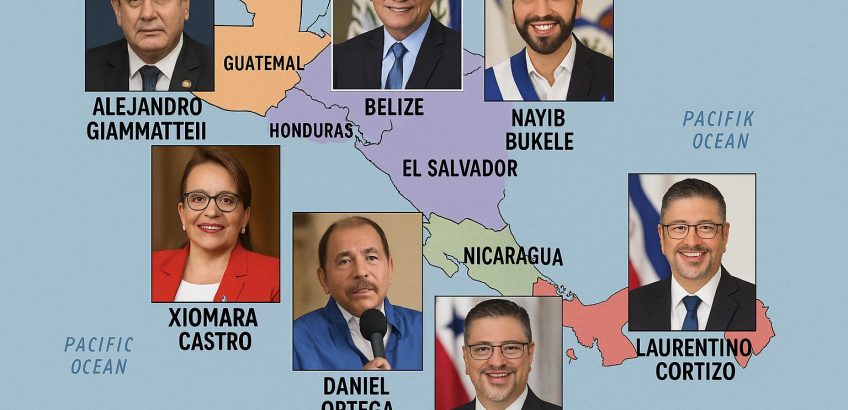
Current presidents of Central American countries
Current Presidents of Central American Countries
Central America, a geographical bridge connecting North and South America, is a vibrant region teeming with a melange of cultures and political dynamics. Comprised of seven countries, Central America’s political landscape is as diverse as its cultural tapestry. As of the latest data available, the leaders of these nations are navigating a myriad of challenges and opportunities in their respective presidencies. Below is an expanded exploration of the current presidents of the Central American countries.
Guatemala
Alejandro Giammattei assumed the presidency of Guatemala on January 14, 2020. His presidency is significant in several aspects, notably in its emphasis on heightened national security, battling entrenched corruption, and spearheading economic development initiatives. Guatemala, a country known for its rich Mayan heritage and dramatic landscapes, faces challenges such as poverty and social inequality. Giammattei’s policies focus on stimulating economic growth by promoting foreign investments and infrastructure development.
One of Giammattei’s primary concerns has been improving security within the nation, which has historically been plagued by crime and violence. His administration has sought to implement stricter law enforcement measures and reform the judicial system to enhance public safety. On the economic front, the focus has been to boost productivity through various development programs and policies aimed at education and healthcare improvements. More insights into his administration’s policies and initiatives can be accessed through the [official government website](https://www.presidencia.gob.gt/).
Belize
In Belize, Johnny Briceño serves as Prime Minister, having taken office on November 12, 2020. As a parliamentary democracy, Belize operates a political system distinctively different from its neighbors. Briceño’s leadership places a significant emphasis on economic growth, healthcare development, and educational reforms. Belize, recognized for its diverse ecosystems and as a beacon for eco-tourism, faces challenges such as environmental sustainability and economic diversification.
Briceño’s administration has worked towards fortifying the country’s economic framework by enhancing tourism, agriculture, and fostering digital transformations. In healthcare, improving accessibility and quality of services stands as a cornerstone of his governance. Education reforms under his leadership aim to prepare the youth better for future challenges by integrating technology and innovative teaching methods. Further information and updates on his administration are available on the [Belize government site](https://www.pressoffice.gov.bz/).
El Salvador
El Salvador’s current president, Nayib Bukele, took office on June 1, 2019. Bukele is widely recognized for his modern approach to governance, particularly through social media, which he utilizes as a direct communication channel with the populace. One of his administration’s most ambitious policies is the adoption of Bitcoin as legal tender, aimed at integrating cryptocurrency into the national economy and facilitating global financial transactions.
His initiatives reflect an innovative blend of technology and traditional governance, focusing on reducing the country’s reliance on foreign currency. Nevertheless, the move has sparked debates on financial stability and inclusivity. Addressing gang violence and improving public safety have also been within Bukele’s ambit, employing technology-driven solutions to curtail crime rates. For those interested in diving deep into Bukele’s administration, additional information can be grasped from the [official presidency site](https://www.presidencia.gob.sv/).
Honduras
Xiomara Castro, who made history on January 27, 2022, by becoming the first female president of Honduras, leads the nation with a commitment to social reform, tackling corruption, and championing women’s rights. Her landmark election represents a progressive shift for Honduras, aiming to address issues such as economic disparity and social injustice.
Under Castro’s leadership, there has been an emphasis on equitable social policies aimed at raising the standard of living and providing opportunities for all Hondurans. The governments’ anti-corruption agenda seeks to establish transparency and accountability across governmental operations, while women’s rights initiatives are focused on promoting gender equality and improving women’s participation in all spheres of life. More comprehensive details about her presidential plans can be accessed on the [Honduran government site](https://www.presidencia.gob.hn/).
Nicaragua
The presidency of Daniel Ortega in Nicaragua marks one of the region’s most enduring political narratives, beginning on November 10, 2006. Ortega’s administration is characterized by controversial political reforms and policies that have stirred both national and international discourse. Nicaragua, rich in cultural heritage and natural beauty, faces critical issues related to political freedoms and economic sanctions.
Ortega’s government has garnered attention for its handling of civil rights and political opposition, raising global awareness and critique regarding democratic standards in the country. Despite these challenges, the government has outlined plans to develop the economy and enhance social programs, though these efforts are often met with skepticism from various quarters. For more insights into the policies and developments, you can explore the [Nicaraguan presidency’s page](https://www.presidencia.gob.ni/).
Costa Rica
As of 2023, Rodrigo Chaves Robles holds the presidency of Costa Rica, taking office on May 8, 2022. Known for being a stable democracy, Costa Rica has a reputation for progressive environmental policies and a robust welfare state. Chaves Robles focuses on addressing economic inequalities prevalent within the nation, along with a strong advocacy for environmental conservation.
His presidency emphasizes economic reforms aimed at revitalizing the labor market and reducing income disparities. Additionally, Costa Rica’s commitment to sustainability continues with initiatives to preserve its diverse ecosystems and reduce carbon emissions, aligning with global environmental goals. To explore his governmental initiatives, visit the [Costa Rican government site](https://www.presidencia.go.cr/).
Panama
The President of Panama, Laurentino Cortizo, has been in office since July 1, 2019. His administration concentrates on economic strengthening measures and enhancing governance transparency. Panama, an essential hub for international trade due to the Panama Canal, focuses on diversifying its economy and fortifying its democratic institutions.
Cortizo’s policies aim at enhancing the canal’s administration while attracting foreign investments that bolster the national economy. Transparency in governance is another central theme, aiming to build public trust and ensure efficient delivery of services. For more about his presidency, refer to the [official government site](https://www.presidencia.gob.pa/).
Central America’s ongoing political evolution illustrates each country’s unique approaches to governance and development. While each leader confronts distinct internal and external challenges, they all strive in varying ways to secure a prosperous future for their nations. Staying informed about these leaders and developments in Central America is vital for comprehending the broader geopolitical landscape.