
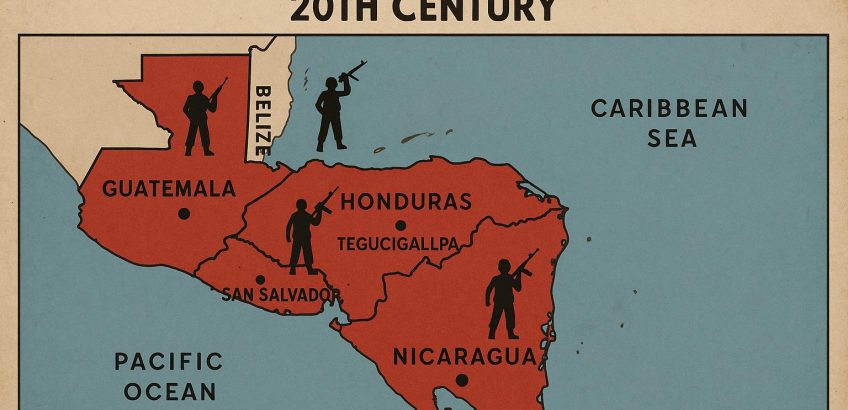
Civil wars in Central America during the 20th century
Background of Civil Wars in Central America
Central America experienced significant upheaval in the 20th century, with civil wars marking a turbulent era for nations like El Salvador, Nicaragua, and Guatemala. These conflicts were driven by various factors, including socio-economic inequalities, political struggles, and international influences. Understanding these complexities provides insight into the region’s history during this period.
The Nicaraguan Revolution
The Nicaraguan conflict largely centered around the Sandinista National Liberation Front (FSLN) and their fight against the Somoza dictatorship. Beginning in the 1960s, the Sandinistas sought to overthrow Anastasio Somoza Debayle, whose regime was marked by authoritarianism and corruption. The oppressive nature of the regime created an environment ripe for revolutionary ideas, with many Nicaraguans seeking change.
By 1979, the Sandinista rebels successfully toppled the Somoza regime, leading to a redefined political landscape and new government structures. The revolution brought significant changes, including agrarian reform and improved social services, yet it also led to the emergence of new conflicts. Following their rise to power, Nicaragua faced the Contras insurgency, a group part-funded by the United States, which was opposed to the Sandinista-led government.
The Contra involvement in Nicaragua is a notable example of how international influences shaped civil conflicts in Central America. The US, motivated by Cold War dynamics and a desire to curb Soviet influence, saw the Marxist-leaning Sandinistas as a threat. As a result, the US provided funding, training, and military support to the Contras, intensifying the conflict. This struggle lasted throughout the 1980s, leading to severe economic strain and a substantial loss of life.
The Civil War in El Salvador
El Salvador’s civil war, beginning in 1979, was primarily between the military-led government and the unified insurgency group known as the Farabundo Martí National Liberation Front (FMLN). This conflict was deeply rooted in issues such as poverty, inequality, and political dissatisfaction among broad segments of the population. The economic disparity and lack of political representation created an environment that was conducive to the rise of insurgent groups like the FMLN.
U.S. involvement played a significant role in shaping the trajectory of the war. Fearing the rise of Communist influence in El Salvador, the US provided considerable military and economic aid to the Salvadoran government. This aid resulted in bolstering the government’s military capabilities, but it also contributed to prolonging the conflict. The war was marked by widespread human rights violations, including the infamous massacre at El Mozote, where hundreds of civilians were killed by government forces.
Negotiations ultimately brought an end to the conflict. The war concluded in 1992 with the signing of the Chapultepec Peace Accords. These accords marked a significant step toward democratic governance, addressing issues like military reform and ensuring greater political participation for former rebels from the FMLN, who transitioned into a political party.
Guatemala’s Prolonged Conflict
Guatemala’s civil war is noted for its duration, spanning over three decades from 1960 to 1996. This extensive conflict primarily involved battles between leftist rebel groups and the Guatemalan government’s military forces. The roots of the war lay in longstanding socio-political oppression and marginalization faced particularly by the nation’s indigenous and impoverished communities.
Approximately 200,000 people, mainly civilians, lost their lives in this prolonged conflict. Internationally, it drew significant attention due to the systemic human rights abuses that occurred, including massacres and forced disappearances. These human rights violations were a byproduct of the government’s strategy to eliminate any form of dissent and were widely condemned on the global stage.
The peace process, which began in the 1990s, eventually resulted in the 1996 peace accords. These accords aimed to address deep-seated social justice issues and focused on integrating former combatants into political life, enacting social reforms, and recognizing the rights of indigenous populations. They were seen as an essential step towards reconciling the nation’s divided society and rebuilding its political institutions.
International Influence and Legacy
The civil wars in Central America were heavily influenced by international forces, especially during the Cold War. The policies of foreign nations, particularly the United States, often used the region as a battleground for ideological supremacy, pitting capitalist interests against perceived communist threats. Aid and military training from these foreign powers directly influenced the strategies and outcomes of the conflicts.
The legacy of these civilization-shaking wars is profound, leaving enduring impacts on political systems, social dynamics, and the economic conditions of the region. Years after the cessation of warfare, these countries continue to grapple with the remnants of past violence and political instability. Reconstruction efforts have been varied, with some nations making significant progress towards recovery and development, while others still face challenges rooted in the socio-economic scars left by years of conflict.
Understanding these historical events is crucial for comprehending today’s socio-political landscape in the region. The wars have highlighted the importance of addressing inequality and political exclusion, lessons which are pertinent not only to Central America but to regions worldwide facing similar challenges. Through the lens of history, we can gain meaningful insights into the pathway towards resilience and stability, understanding that the journey involves substantial effort in fundamentally reconfiguring societal norms and systems.
For further exploration into these topics, readers can explore history resources that provide detailed accounts and analyses of these pivotal moments in Central America, enriching the understanding of the complex interplay of local and international forces during this tumultuous period.